
Plainsboro City Directory Collections
Plainsboro has no verified, complete city-directory run of its own in the sources reviewed. The closest documented shelf is Princeton Public Library's Princeton Room. Its holdings are Princeton-centered, yet some volumes reach into nearby Middlesex and Mercer communities. A volume must be checked for the street, postal place, or surname at issue. The second-floor Information Desk can help locate physical books, microfilm, and uncatalogued material before a searcher assumes that a title includes Plainsboro.
| Collection | Known years | Where held | How to use it |
|---|---|---|---|
| City/Polk print directories | 1916-17 through 1982, with gaps | Princeton Room, Princeton Public Library | Physical volumes; ask staff about local coverage. |
| Polk's Princeton microfilm | 1901-35 | Princeton Room Information Desk | Three microfilm reels for older name and address leads. |
| HeritageQuest Polk directories | 1901-15, 1919, 1921-28, 1931-36, 1938-42, 1947, 1949-50, 1952, 1954-55, 1957-58 | Princeton Public Library online access | Searchable digitized text and images, subject to access rules. |
| Community Phone Book | 1961, 1963-89, 1997-2001, 2003 | Physical, uncatalogued library holdings | A subscriber lead, not proof of ownership or occupancy. |
| Hill-Donnelly / InfoUSA criss-cross titles | Variable by title | Physical reference books | Address-first or telephone-first searching when a volume is available. |
Collection gaps are part of the result. A missing year, a Princeton-only title, or a physical-only book means the record cannot settle a question by itself. Keep the volume year, page, spelling, and place label with every note. Those details make later checks in a deed, assessment, census, or newspaper far easier.
Note: A no-hit in a Princeton-centered directory does not establish that a Plainsboro household was absent from the area.
Plainsboro City Directory Research Room
The Princeton Local History Resource Guide places city directories beside maps, census material, local newspapers on microfilm, clipping files, genealogy resources, and local maps. That mix matters when a directory uses a road, farm, school, or nearby postal place instead of the current township name. Start at the second-floor Information Desk and state the person, address, approximate decade, and possible nearby place. Staff assistance is especially useful for the uncatalogued phone books and the physical criss-cross titles.
The HeritageQuest directory access page is the online branch of the search. It describes full-text Polk material from 1901 through 1958 with gaps, while the library's listed year runs show exactly where a year-by-year check is possible. Search the surname, Plainsboro, a nearby road, and alternate place wording. Then inspect the page image instead of relying on a search hit alone, because OCR and abbreviations can distort a name.
A view of the Princeton Library local-history guide identifies the paths that connect Plainsboro city directory research with criss-cross books, newspapers, maps, and genealogy holdings.
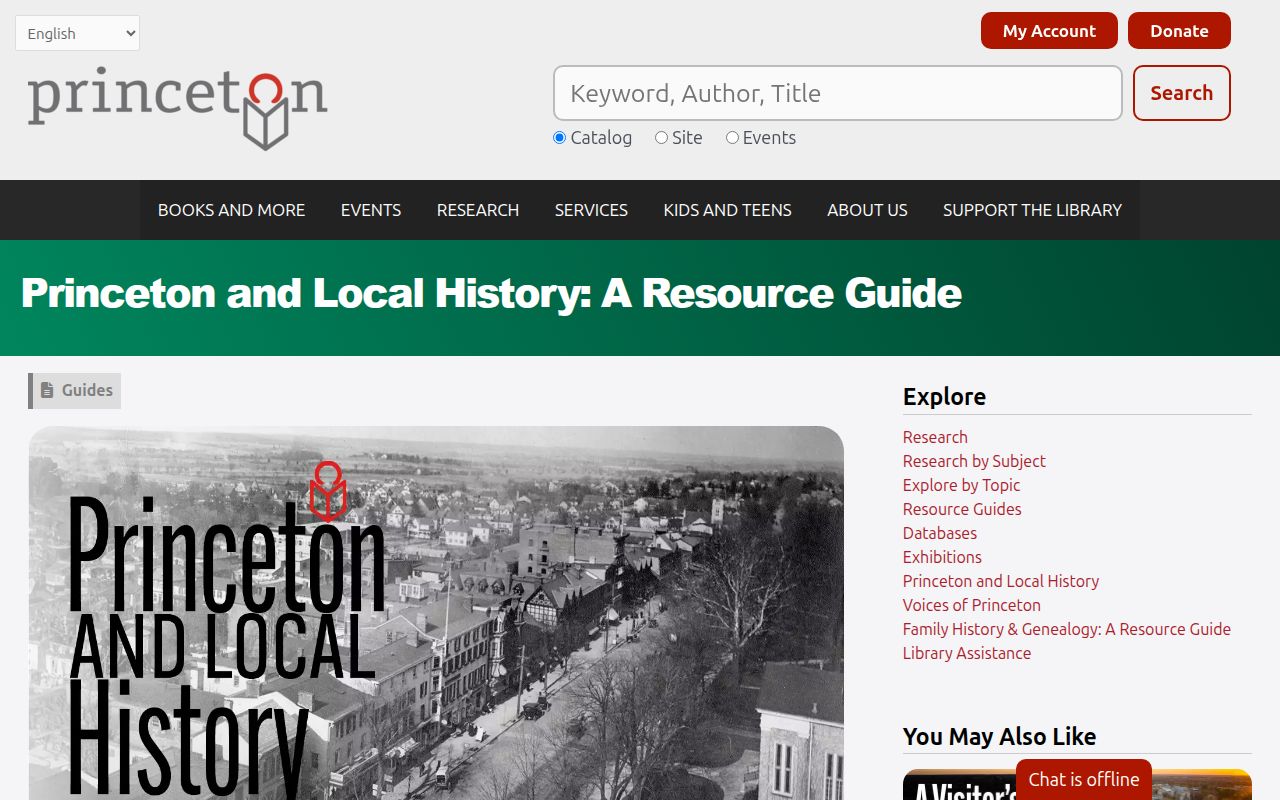
Use the guide as a route to the collection, not as evidence that every listed series covers Plainsboro. The physical item and its page are the record to evaluate.
Plainsboro City Directory Digital Years
HeritageQuest makes the named Polk runs useful from home when access is available, but it does not turn the collection into a seamless Plainsboro database. The documented online years jump over several intervals. Print City/Polk volumes continue from 1916-17 through 1982 with gaps, so a search may need both the digital run and a Princeton Room visit. Record the publication year first, then test the exact listing against the original page and another dated source.
The digitized Princeton directory collection provides the online entry point for those Polk year runs.
Its value is the ability to test a name or road across specific years. Its limit is equally important: a search result may concern Princeton or another nearby community, so retain the printed locality shown on the page.
Reading a Plainsboro City Directory
A city directory entry is a compact, dated clue. It may list a household name, initials, a street line, a telephone-related listing, and abbreviations that identify the type of entry. Later books may organize people alphabetically while their criss-cross companions organize listed addresses or telephone numbers. Treat the wording that appears in the volume as the source label. It can suggest a next search, but it does not by itself prove that a person owned a property or remained there for a full year.
| Listing name | Copy the name, initials, punctuation, and spelling exactly as printed. |
|---|---|
| Street line | Record the house number, road name, postal place, and directory year together. |
| Telephone or address order | Note whether the book presents an alphabetical listing or a reverse, address-oriented listing. |
| Abbreviations | Photograph or transcribe the volume's own key before interpreting short labels. |
| Page context | Keep the volume title and page so another researcher can recheck the entry. |
- Criss-cross directory
- A reference book arranged by listed street address or telephone number, useful when the address is known before the name.
- Householder index
- An alphabetical finding list for household names when the volume supplies one; it is not a complete count of everyone at an address.
- Abbreviation key
- The publisher's guide to its short forms. Read it before assigning meaning to a mark beside a name or address.
Plainsboro City Directory Gaps
The three microfilm reels covering 1901-35 are a strong starting point, not a claim of full local coverage. The same caution applies to Hill-Donnelly and InfoUSA criss-cross books, whose title and year availability vary and whose copies are physical. Princeton Community Phone Book holdings cover selected periods from 1961 through 2003. A subscriber record can point to a household, yet it is not automatically a property record or an occupant record.
This contrast is useful: digitized Polk years allow text and image searching, while physical books can supply a later or address-first lead that the online run lacks. Both paths have gaps. The strongest conclusion names the source, the year, the role shown, and the source's limit rather than filling an empty year with a guess.
Plainsboro Directory Clues at Wicoff
For material that is actually centered on Plainsboro, the John Van Buren Wicoff House Museum can be more useful than a regional directory shelf. Its collection includes photographs, documents, ephemera, and material on residents, businesses, organizations, churches, schools, and community groups. Digitization is ongoing, and the museum invites research requests rather than offering a complete public name index. Send the collection category, approximate date, street or place, and a clear research question.
The Wicoff House collections page shows the local categories available for Plainsboro history research.
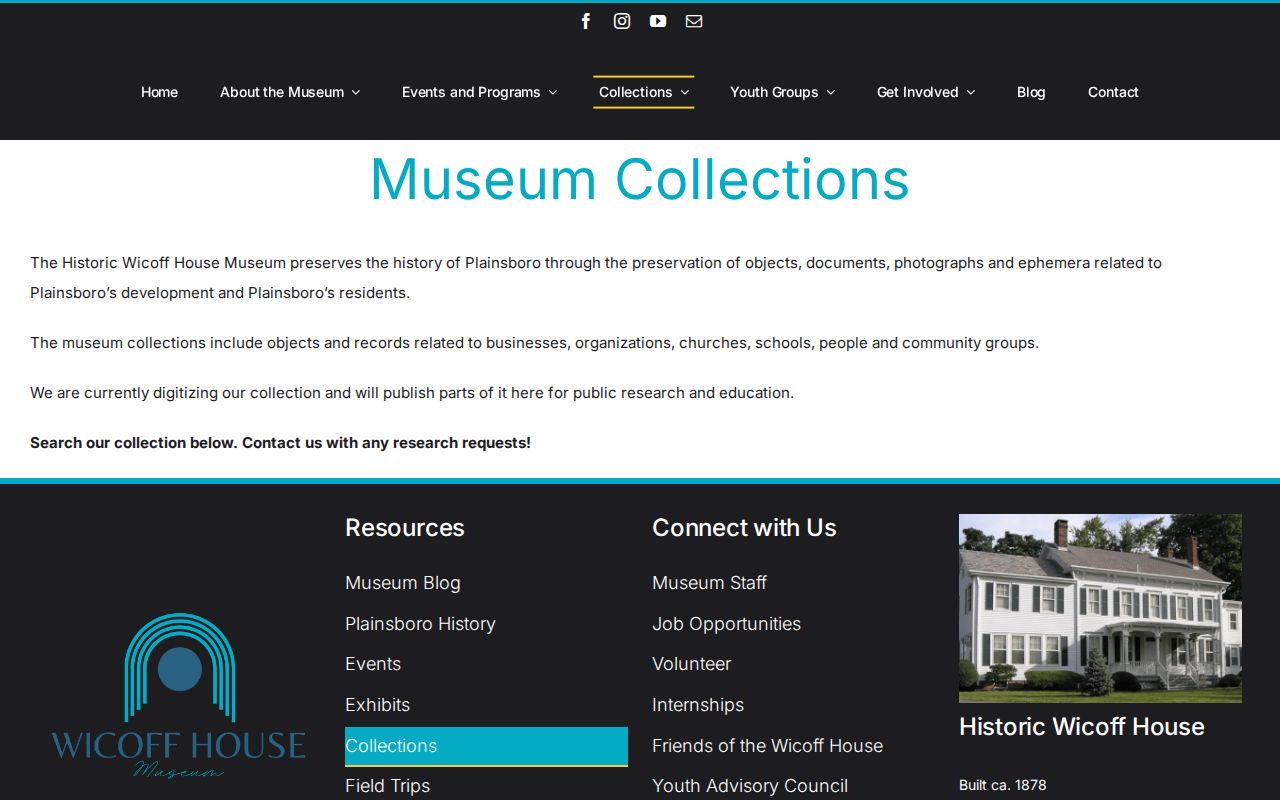
A letter, photograph, or object should be logged by description, approximate date, named people, place, public provenance if shown, and whether access is digital or by appointment. No public object-level catalog number was verified, so none should be invented.
Plainsboro City Directory Newspaper Bridge
When a directory supplies a name or a road, the Princeton Local Newspaper Index can test it in local citations. General articles run from 1983-2006; obituary indexing reaches back to 1975 for both newspapers and to 1892-1950 for Princeton Packet obituaries. The index gives citations, not full text. A no-hit may reflect Princeton focus, incomplete coverage, or a different spelling.
Papers of Princeton offers digitized publications, including Town Topics from March 17, 1946 through December 25, 2013, plus separate and gapped earlier titles. Search an old road, school, farm, Walker-Gordon, Wicoff, or surname after a directory lead. OCR can miss names, so inspect likely image pages and preserve the newspaper date and page with the directory note.
Tracing Plainsboro City Directory Households
Follow one household through dated records rather than trying to force a continuous story from a single volume. Start with the first confirmed listing and preserve its exact wording. Check the next available directory year, then use a census or other dated historical record to bridge a longer interval. Address-first criss-cross books are helpful after a move, especially when a surname is common. A later address trail belongs in the Previous Residents search.
- Find the earliest available listing for the name, road, or known place and copy its year and page.
- Check the next available directory year, keeping spelling changes and the printed locality in the notes.
- Use a criss-cross volume, when available, to test the listed address from the address side.
- Pair the dated directory sequence with a relevant census, newspaper citation, deed, or archive finding aid.
- When the listing ends, test a move, a changed jurisdiction, or a collection gap before drawing a conclusion.
Plainsboro incorporated in 1919 from South Brunswick and Cranbury. For older material, test the former township name that fits the address location rather than assuming every earlier record used Plainsboro.
Note: A change in a directory listing may reflect a move, a different publication practice, or an unsearched gap.
Plainsboro City Directory Timeline
Dates help keep the collection sequence straight and show why a local search can switch between town names, library formats, and museum sources.
- 1901-35: Polk's Princeton city directories survive on three microfilm reels at the Princeton Room.
- 1919: Plainsboro Township incorporated from parts of South Brunswick and Cranbury.
- 1916-17 to 1982: City/Polk print directories are listed with gaps in Princeton Public Library holdings.
- 1961 to 2003: Selected Princeton Community Phone Book years appear in uncatalogued physical holdings.
- Spring 2026: Wicoff House sought pre-1970 Plainsboro letters, photographs, and personal objects for its growing collection.
Plainsboro City Directory Search Terms
When a person does not appear under a modern street label, try local place names that connect people and records. Walker-Gordon arrived in Plainsboro in 1897, its Rotolactor system began in 1930, and dairy operations ended in 1971. The Mapleton school story offers another dated trail: it had 46 pupils by 1880, and a four-room school opened in 1920. A search of those names in directories, newspaper citations, Wicoff material, and archive finding aids may locate a community connection without turning it into an unsupported residence claim.
The Princeton University Digital Sanborn interface is a useful regional map reference, but no Plainsboro sheet was verified in the research. It should be treated as a comparison tool, not labeled as a local Plainsboro map source.
A view of the regional Sanborn maps interface illustrates the map collection that requires a location-by-location coverage check.
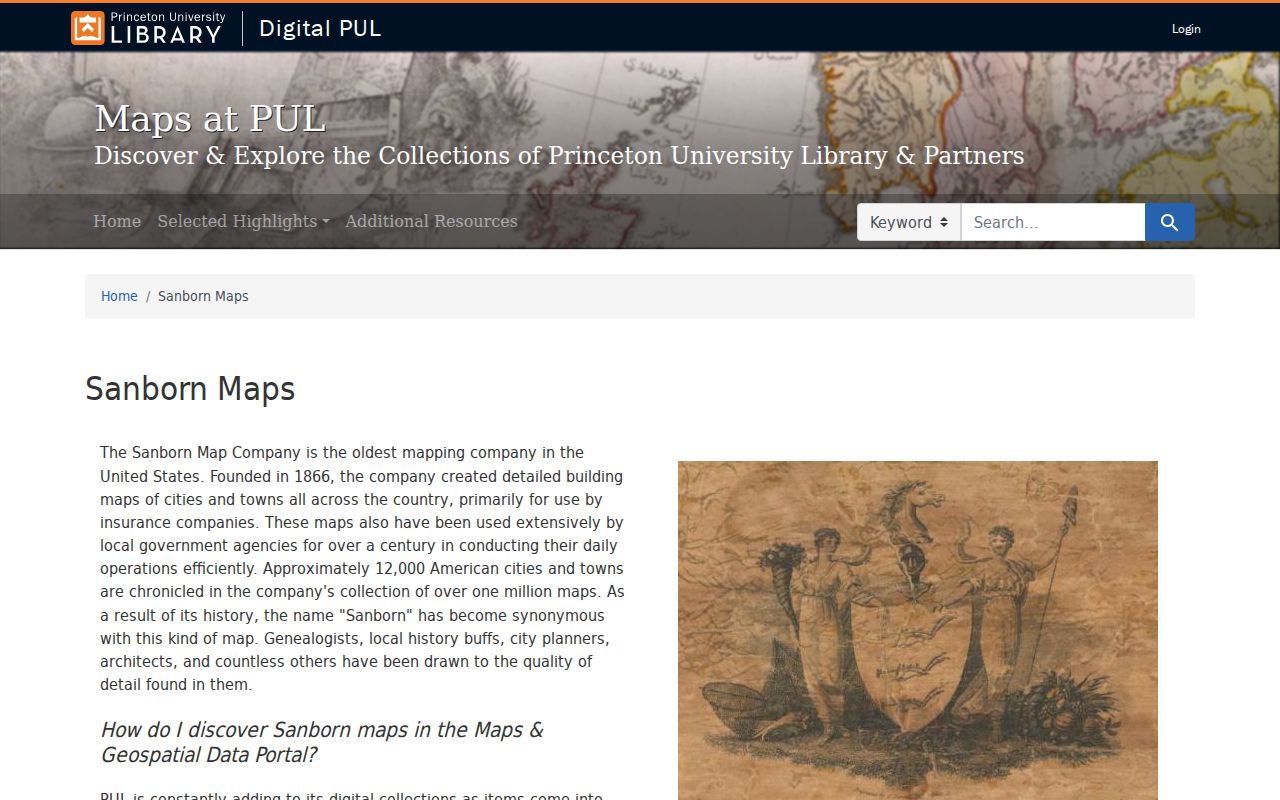
Do not use a regional map interface to fill a missing directory year. The better result is a clearly documented gap and the next appropriate library, archive, or museum route.